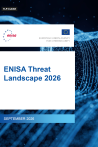
To shape our understanding of the cyber threat landscape and the dynamics at work, ENISA collected and analysed incidents and events observed from 1 January to 31 December 2025 for this new edition of the Threat Landscape.
The ENISA Threat Landscape (ETL) report is the annual report of the European Union Agency for Cybersecurity, ENISA, on the state of the cybersecurity threat landscape.
The ENISA Threat Landscape (ETL) report is the annual report of the European Union Agency for Cybersecurity, ENISA, on the state of the cybersecurity threat landscape. ENISA just released the 2026 ETL covering a reporting period from January 2025 to December 2025.
The 2026 ENISA Threat Landscape confirms that cyber dependencies expand the attack surface and require a new level of vigilance to effectively prevent and mitigate the impact of cyber incidents.
The cyber threat landscape of the European Union is still shaped by a combination of recurrent threats.
Key highlights of the 2026 ENISA Threat Landscape
- Ransomware remains the most short-term impactful type of incident.
- Geopolitical developments still influence cyber activity affecting the EU with hacktivist-led DDoS campaigns targeting essential entities.
- Public administration continues to be is the most targeted sector.
- Organisations across the EU are likely to continue facing a combination of cybercrime, cyberespionage and hacktivist activity driven by geopolitical developments.
- Emerging AI models are expected to be increasingly used to support malicious operations.
Most targeted sectors
-
Considering the total number of incidents, 73% of the targeted organisations are essential and important entities as per the NIS2 definition. The most targeted sector remains public administration in 32% of cases. Other targeted sectors included business services (8%), transport (8%), manufacturing (7%) and finance/ banking (6%).
-
The threat picture for public administrations is largely impacted by ideology-driven DDoS attacks which accounted for 82% of the recorded events.
Related content
ENISA Sectorial Threat Landscape - Public Administration
This ENISA sectorial threat landscape report provides an overview of the cyber threats faced by the public administration sector in the EU in 2024.
ENISA Threat Landscape 2025
Through a more threat-centric approach and further contextual analysis, this latest edition of the ENISA Threat Landscape analyses 4875 incidents over a period spanning from 1 July 2024 to 30 June 2025.

ENISA Cybersecurity Threat Landscape Methodology
This publication outlines the updated ENISA Cybersecurity Threat Landscape (CTL) methodology, building on the 2021 Threat Landscape Report and the 2022 methodology.
Subscribe
Stay updated with ENISA! Sign up for email alerts on publications, events, vacancies, and more.